Log in
Register


The natural functioning of memory means that, after 1 month, we remember just 3% of what we have read and learnt.
This means that the wealth of information we have learnt is intended to be lost.
Applying the memory strategies, it’s possible to improve in a significative way this input, getting to remember in a spontaneous way about 70% of the memorised information after 1 month.
2 days path with the support of a e-learning and customised coaching + 1 day of follow up
Interactive methodology includes theoretical moments with practical exercitations, simulations, on line coaching.

Statistics say that a well-trained lecturer can read 200 words in a minute (w/m) and he is able to understand 30% of the meaning, on average.
ReADAR course is focused on the development of abilities that allow you to increase the reading speed and, most important thing, comprehension.
| Speed (w/m) | Comprehension % | Reading Coefficient % | |
| Before the course | 200 w/m | 30% | 60% |
| After the course | 400 w/m | 70% | 280% |
2 days path + 1 days of follow up
Interactive methodology with some theoretical moments with practical exercitations, simulations, an entrance test and a final test to measure results, on line platform and coaching.
1. Entrance test on reading;
2. Reading process and strategies;
3. Techniques on how to focus the attention;
4. Intuitive reading, PhotoReading®;
5. Techniques on how to increase natural speed in reading: saccadic movements speed and focal field/area widening;
6. Active reading: sq3r method for the reading quality;
7. Active elaboration techniques of read information;
8. Management of focusing natural rhythm;
9. Reading motivation;
10. Final test to measure progresses on reading performance.

Several studies on communication have raised an important input: ¾ of the impact of a message depends on the way it’s been communicated, only ¼ depends on the effective content.
It’s important to learn how to communicate in the most efficient way.
This course is focused on the development of rhetorical abilities, of communicative strategies and of elaboration of the speech, both written and oral. The acquired methods range from the classical rhetoric to more developed methods about communication, proposing the IDEAM™ method.
2 days path + 1 day of follow up
Interactive methodology with some theoretical moments with practical exercitations and simulations.

Project Mind™ is the result of 20 years of experience in the field of Project Management, together with developed tools of the brain function. The participants will learn how to recognise their dominant thinking styles.
We were mostly inspired by neuroscientific studies and the evolution of Edward de Bono’ thinking, guru of the Creative thinking.
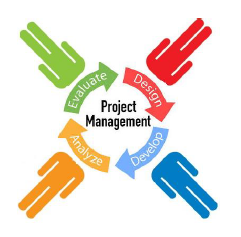
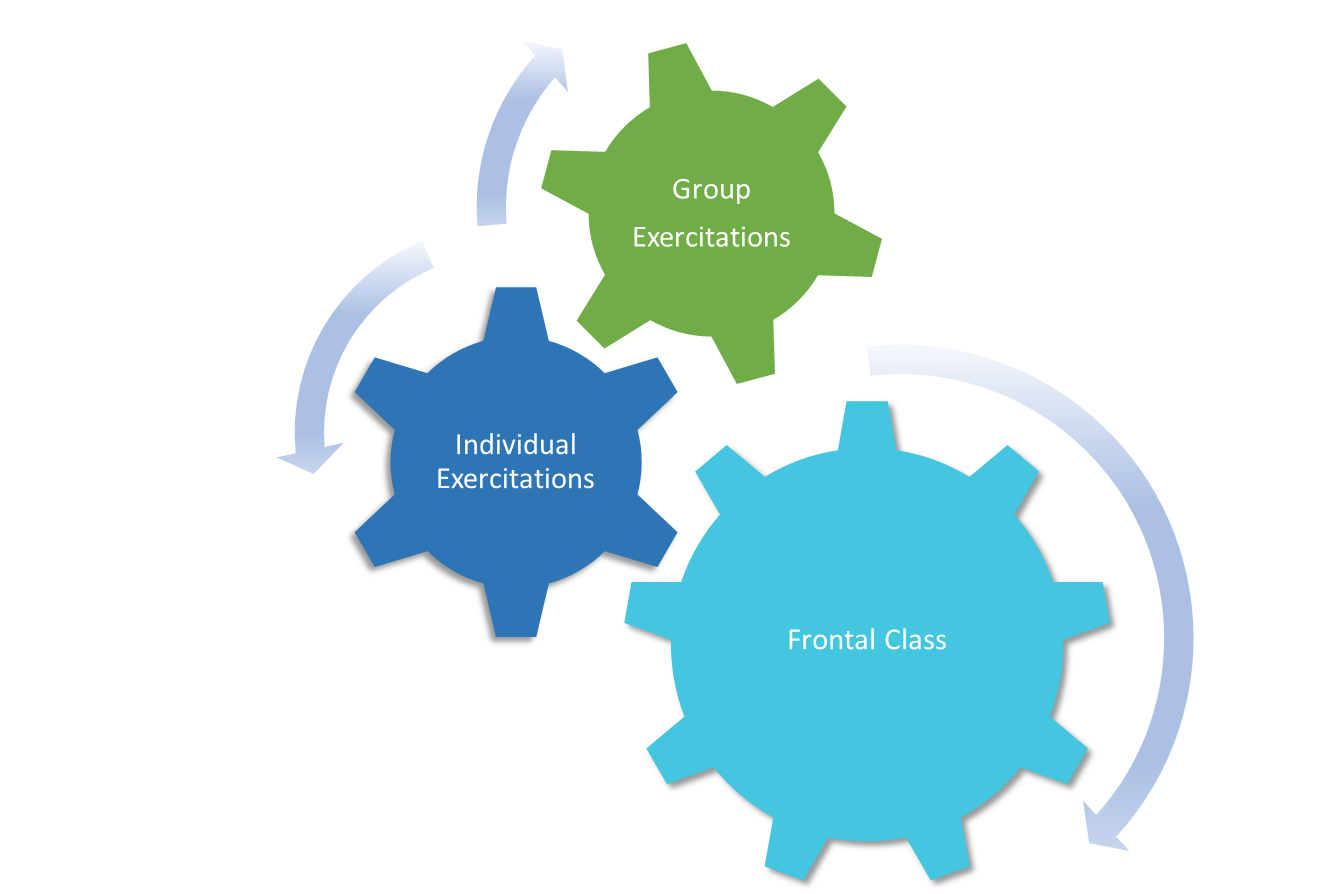
In the 3-days version, there will be a real project that you can work on in an active way, with the support of a project learning platform and learning community.

Everyday thousands of meetings take place: useless, expensive and in the wrong way. Only in the US, the annual cost for “bad meetings” is 37 billion of dollars a year. Middle managers spend 35% of the time in meetings and top managers more than 50%, on average.
Meethink™ course was developed in order to maximise people’s time during meetings and make them more productive. In fact, thanks to the techniques acquired during the course, the participants will learn an easy method that will allow them to save time during meetings and to increase the quantity and the quality of ideas.
Moreover, thanks to the Meethink™ profile test, the participants will discover their dominant thinking styles and the ones of their colleagues too.
Interactive methodology: theoretical moments and practical exercitation and simulations during the class.
Test - Meethinker™: a test that allow you to discover your thinking styles, and understand what blocks you during meeting management.
The three phases of Meethink™:
The parallel thinking and the 10 thinking styles for meetings.
A test to discover your thinking styles to identify how to exploit the potential, both individual and of the group, in order to have more efficient meetings.

The promotor of the “Markethink” project is Massimo Soriani Bellavista.
Here you can find my profile and my interests (Massimo), if you want to contact me you can write to This email address is being protected from spambots. You need JavaScript enabled to view it. or call my society in Milan - www.creattivita.com 00390262694490
If you want to report a “case” for the Ideabase (http://www.markethink.guru/it/ideabase), send an e-mail to This email address is being protected from spambots. You need JavaScript enabled to view it. with:
We will take notes of all the reported cases, and we will publish them according to our editorial lines.
linkedin profile https://www.linkedin.com/pub/massimo-soriani-bellavista/4/59a/113

Steven Paul Jobs was an American entrepreneur, marketer and inventor, who was the cofounder, chairman, and CEO of Apple Inc. Through Apple, he is widely recognized as a charismatic and design-driven pioneer of the personal computer revolution and for his influential career in the computer and consumer electronics fields, transforming "one industry after another, from computers and smartphones to music and movies."

Born in Mount Vernon, New York, Godin received his high school diploma from Williamsville East High School in 1978 before graduating from Tufts University with a degree in computer science and philosophy. Godin attended Camp Arowhon, where he was a valued canoe instructor. He still frequents the camp to tell ghost stories. Godin often refers to his camp days in his writings. Godin earned his MBA in marketing from the Stanford Graduate School of Business. From 1983 to 1986, he worked as a brand manager at Spinnaker Software.